|
Getting your Trinity Audio player ready...
|
Leaving LED lights on for extended periods probably crosses your mind more than you’d admit. Maybe you’re worried about your electricity bill. Maybe you wonder if they’ll burn out faster. Or maybe you just like the idea of coming home to lit spaces.
The short answer: LED lights are designed to run continuously, and keeping lights on all night won’t damage them immediately. But there’s nuance here, and it’s worth understanding.
Can You Really Leave LED Lights On All Night?
Yes, technically you can leave led light on whole night. LEDs are fundamentally different from incandescent bulbs, which generated heat as their main byproduct and had real limitations on run time. Your LED bulb doesn’t work that way.
LED lights operate through electroluminescence (a process where electrical current passes through a semiconductor material), not heat-based light production. This means they don’t degrade the same way older bulbs did. Modern LED bulbs are rated for thousands of hours of continuous operation.
That said, “can” and “should” aren’t the same thing. Running LEDs 24/7 will shorten their lifespan compared to normal use cycles. It’s just a question of how much.
What’s the Actual Lifespan of LED Lights Left On Continuously?
Most LED bulbs carry a rating of 25,000 to 50,000 hours of life expectancy. Some premium models claim 100,000 hours. These numbers assume typical on-off usage patterns, not continuous operation.
Here’s the math: A 25,000-hour LED bulb running 8 hours daily will last roughly 8-9 years. Run that same bulb 24/7, and you’re looking at 2-3 years instead.
Real-world data shows LED performance degradation at these rates:
- Continuous operation (24/7): Approximately 70-80% brightness remaining after rated life
- Normal use (8 hours/day): 85-90% brightness remaining after rated life
The difference isn’t catastrophic, but it’s measurable. Your bulb dims gradually rather than burning out suddenly. Most people won’t notice this dimming until the bulb reaches 50-60% of its original brightness.
Temperature plays a huge role here. LEDs produce less heat than incandescent bulbs, but they’re not heatless. The driver circuit and semiconductor components generate warmth, especially in enclosed fixtures. Leave them on continuously, and that heat accumulates inside the bulb and fixture, accelerating degradation.
Does Leaving LED Lights On Cost You Real Money?
Let’s stop guessing and look at actual numbers. LED bulbs use far less energy than what came before them, but costs still add up over time. Leaving LED lights on all night cost as given below:
A typical 10W LED bulb (equivalent to a 60W incandescent) draws 10 watts. Running one bulb continuously for a month:
10W × 24 hours × 30 days = 7.2 kilowatt-hours
At an average US electricity rate of $0.14 per kWh, that single bulb costs about $1 monthly. Over a year, it’s roughly $12.
This seems small. But most homes have multiple lights. If you’re running 5 bulbs continuously, you’re looking at $60 annually per fixture type. Scale that across a home with 20-30 bulbs, and continuous operation becomes expensive.
Real cost breakdown for a household:
- 10 LED bulbs running 24/7 for one year: ~$120
- 10 LED bulbs on normal use (8 hours/day): ~$40
The difference? $80 per year. That’s the money you’re essentially burning by leaving lights on unnecessarily.
Incandescent bulbs would cost 5-6 times more to run continuously. So yes, LEDs are efficient. But “efficient” doesn’t mean “free.”
A Real Test On Checking The Cost Of LED Lights
Heat, Degradation, and Why Your LED Bulb Gets Warm
This is where continuous operation actually matters. LED bulbs produce heat, but nowhere near as much as incandescent models. A typical LED generates heat concentrated in the base (the ceramic component where the semiconductor sits), not throughout the bulb like older technology.
When you leave LED lights on for 24 hours, that heat doesn’t dissipate completely, especially in summer or in enclosed fixtures (like recessed ceiling lights or lamps with shades). The components are designed for periodic cooling cycles during off-time.
Here’s what happens with continuous heat exposure:
The degradation chain:
- Higher sustained temperature
- Faster electrolytic capacitor aging (a component in the LED driver)
- Reduced light output
- Color shift (warm whites can drift toward yellow)
- Shortened lifespan
A study by the U.S. Department of Energy found that LED bulbs operating at elevated temperatures (10°C above rated temperature) experience roughly 50% lifespan reduction. Leave a bulb on in a poorly ventilated fixture during summer? That temperature differential is real.
Check the base of an LED bulb that’s been on for several hours. It’ll be noticeably warm (typically 40-60°C, or 104-140°F). That’s normal operation. But continuous operation means that heat never really stops building up.
What About Safety? Can Leaving LED Lights On Cause Fires?
Short answer: It’s extremely unlikely, but not impossible.
LEDs are inherently safer than incandescent bulbs because they produce minimal heat compared to the bulb’s surface temperature. An incandescent bulb surface reaches 150-250°C (300-480°F). An LED bulb surface stays around 40-50°C (104-122°F). That’s why you can touch an LED bulb after it’s been on (don’t do this with incandescent).
The real fire risk with LEDs comes from poor-quality manufacturing or improper use:
Actual safety concerns:
- Cheap knock-off bulbs with faulty drivers can overheat and fail
- LED bulbs installed in fixtures designed only for incandescent use (overheating risk)
- Bulbs installed in fully enclosed fixtures with no ventilation
- Using bulbs rated for a lower wattage than the fixture allows
Most legitimate LED bulbs (from brands like Philips, Osram, GE, Sylvania) have built-in thermal protection that shuts off the bulb if temperatures exceed safe limits. This is standard in quality products.
Safety & Temperature Comparison
| Bulb Type | Surface Temp | Max Safe Touch | Fire Risk | Heat Concern |
|---|---|---|---|---|
| Incandescent | 150–250°C | No (danger) | High | Extreme |
| Halogen | 200–300°C | No (danger) | Very High | Extreme |
| LED | 40–50°C | Yes (safe) | Very Low | Minimal |
When Should You Actually Turn Off Your LED Lights?
This depends on what you’re trying to optimize for: cost, bulb lifespan, or pure convenience.
For cost savings: Turn them off whenever you’re not using the space. Every hour saved is electricity money kept. If you’re leaving a room for more than 15 minutes, turn it off.
For maximum bulb lifespan: Treat LEDs like normal light use. On when you need them, off when you don’t. This maximizes the 25,000-50,000 hour rating.
For security (motion-sensor or timer lighting): Leave them on as needed. The slight reduction in lifespan is worth the security benefit.
For ambiance (like bedroom lighting at low brightness): Running warm-tone LEDs at reduced brightness or a few hours before bed won’t meaningfully impact cost or lifespan. The trade-off for comfort is worth it.
The practical answer: Don’t leave lights on in unoccupied spaces. That’s waste. Do leave them on in spaces where you benefit from the light or the ambiance. Your comfort isn’t the enemy of efficiency if you’re conscious about it.
My Personal Experience with E27 Warm White LED Bulbs
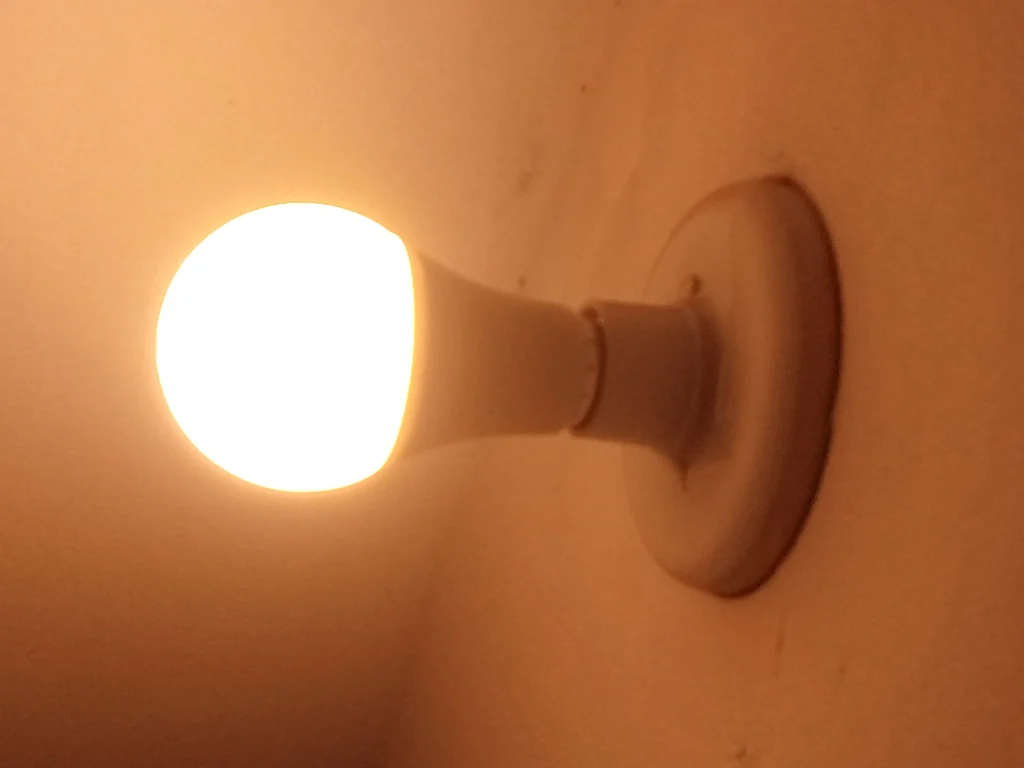
I’ve been using E27 bulbs with warm white color temperature (around 2700K) in my bedroom for years now. The yellowish glow isn’t just marketing, it actually works.
When I switched from cooler daylight bulbs (4000K+), the difference in how I felt was immediate. That cozy, warm light triggers a relaxation response. My bedroom stopped feeling clinical and started feeling like, well, a bedroom. The warm white LED creates an environment where my brain actually winds down.
The specific appeal: That amber-tinted glow is reminiscent of incandescent lighting, which our bodies are wired to interpret as “time to rest.” It’s neurological, not just aesthetic. Studies show that warm-spectrum light (2700K or lower) suppresses melatonin production less than cool light, making it better for evening use.
I’m not running these continuously. They’re on 2-3 hours most evenings, off during the day. At that usage level, they’ve held up perfectly for 4+ years. The color hasn’t shifted. Brightness is consistent. No dimming or flickering.
But here’s what I noticed: When I use cheap, off-brand warm white LEDs (buying budget options from discount stores), they tend to drift. The color shifts warmer than intended, sometimes toward an orange-yellow. The driver circuits are cheaper, so they don’t regulate as well. With quality bulbs (Philips, Osram, or equivalent), that doesn’t happen.
If you’re buying warm white LEDs for evening use, the brand matters. Cheap doesn’t equal broken, but it does mean less consistent color and potentially shorter lifespan.
The Real Impact of Fixture Type on LED Performance
Where you install an LED bulb matters as much as how long you run it.
Enclosed fixtures (recessed ceilings, fully covered dome lights, or fixtures with shades) trap heat. This is where continuous operation becomes problematic. That trapped heat accelerates capacitor aging and can reduce lifespan by 30-50%.
Fixtures with poor ventilation in hot climates face the worst conditions. A recessed light in Arizona running continuously will degrade faster than the same bulb in an open fixture in a cooler climate.
Check the bulb’s datasheet for “maximum ambient temperature.” Most LEDs are rated for 25-40°C ambient temperatures. If your fixture creates an environment warmer than that, continuous operation stresses the electronics.
How to Extend Your LED Bulb’s Life
Simple habits compound. None of these require sacrifice.
Turn off lights in empty rooms. This is the obvious one. An hour saved daily per bulb means 365 hours annually, which extends lifespan by roughly 1.5% per bulb. Across 20 bulbs in a home, that’s meaningful.
Install bulbs in well-ventilated fixtures. If you’re replacing bulbs in enclosed fixtures, choose fixtures with better airflow when possible. Or use lower-wattage bulbs in enclosed spaces.
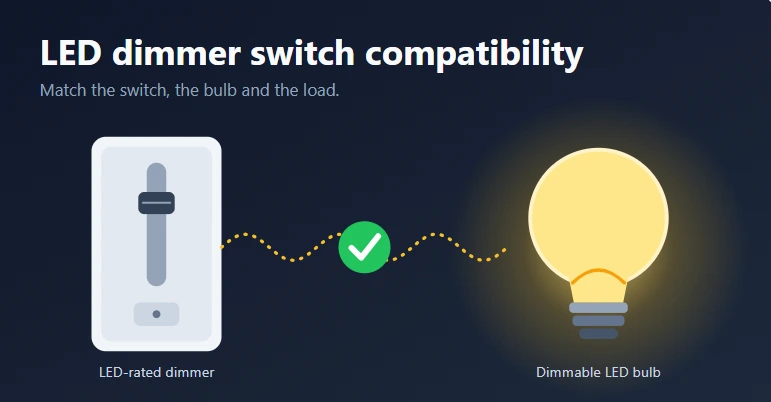
Avoid dimming cheap LEDs. Not all LEDs respond well to dimmers, especially budget models. The driver circuit can struggle, generating extra heat. If you want dimmable lighting, buy bulbs explicitly rated for dimming (they cost a bit more but perform better).
Buy quality. Premium LED bulbs cost 2-3 times more upfront, but they’re rated for higher temperatures, have better drivers, and maintain color consistency longer. Over a 5-year period, the cost difference becomes negligible.
Use smart bulbs if you forget to turn things off. Smart bulbs with motion sensors or scheduled on-off cycles ensure you’re not running lights unnecessarily. The automation pays for itself in saved electricity.
Leaving Lights On During the Day vs. Night
Day versus night matters more than you might think.
During daytime, outdoor temperature is typically higher. Running enclosed or poorly ventilated fixtures continuously means you’re fighting ambient heat plus internal bulb heat. The bulb’s lifespan takes a bigger hit.
At night, especially in air-conditioned homes, ambient temperature is lower. The same bulb has an easier time dissipating heat. Lifespan impact is reduced.
This is why those “porch lights left on 24/7” suggestions are less damaging at night than they’d be during summer days. The time of operation actually matters.
If you need continuous security lighting, consider motion-sensor setups instead. They provide security without continuous operation strain, and you save money.
Open fixtures (like most table lamps or pendant lights) allow heat to dissipate freely. LEDs in these setups can handle continuous or near-continuous operation without significant performance loss.
| Purpose | Max Hours/Day | Cost/Year (10W) | Lifespan Impact | Recommendation |
|---|---|---|---|---|
| Minimize waste | 8 hours | $3.50 | None | Yes – optimal |
| Evening ambiance | 10–12 hours | $4.50–5.50 | Minimal (5%) | Yes – acceptable |
| Extended use | 16 hours | $7.00 | Moderate (20%) | Quality brand only |
| Security lighting | 18–20 hours | $8.50–10 | High (30%) | Premium brand required |
| Continuous (24/7) | 24 hours | $12.00 | Critical (50%+) | Only if necessary |
The Numbers on LED Reliability
What actually breaks LEDs? Rarely the semiconductor itself. Usually the driver circuit.
Most LED failures happen within the first 1,000 hours (infant mortality defects in manufacturing) or after the bulb reaches 50% of its rated life (when capacitors finally degrade enough to fail).
Very few LEDs actually die by reaching their rated lifespan. They decline gradually—getting dimmer over time until you notice and replace them.
If you’re seeing LED failure within the first 1-2 years and you’re using quality brands, check your voltage. Unstable voltage (especially in older homes or areas with power quality issues) stresses the driver circuit. A voltage regulator can extend lifespan significantly.
When Continuous Operation Actually Makes Sense
Not all continuous operation is wasteful. Some scenarios justify it.
Security and motion-sensor lighting: Leaving a front porch light on or having lights on a timer provides genuine safety value. The small cost increase and lifespan reduction are worth it.
Decorative ambient lighting: If warm white LEDs create an environment where you relax and sleep better (like my bedroom setup), the hours you gain in well-being offset the tiny cost increase.
Server rooms or 24/7 operational spaces: Professional settings often require continuous operation. Costs are built into budgets.
Seasonal or temporary setups: Holiday lighting or temporary installations don’t justify overthinking it. Run them as needed.
The key distinction: Is the continuous operation providing concrete value, or are you just forgetting to turn the light off?
Final Thoughts: Be Deliberate, Not Wasteful
LED lights can stay on longer than older bulb types. Your bulb won’t explode. The safety risk is minimal. But continuous operation does cost money and does shorten lifespan.
The smartest approach is deliberate use. Run lights when they serve a purpose. Build the habit of flipping switches in empty rooms. If you struggle with that, automate it with smart bulbs.
That warm white E27 bulb creating a cozy bedroom environment? Worth keeping on for those 2-3 evening hours. Leaving the kitchen light on while you’re at work? Not worth it.
Think of it this way: Your LED bulb can last 25,000 hours. Whether that’s 3 years of continuous use or 8 years of normal use depends entirely on your choices. The difference is electricity money in your pocket and bulbs you don’t have to replace as often.
Smart choices compound. Turn off what you don’t need. Keep on what makes your life better. That’s the whole equation.
FAQs
Can You Leave LED Christmas Lights On All Night?
Yes, LED Christmas lights are designed to run continuously and won’t damage overnight. However, leaving them on all night costs approximately $0.12–$0.30 per month per strand (depending on wattage) and will reduce lifespan from 5+ years to 2–3 years with heavy continuous use. Most people turn them off to save electricity and extend bulb life, but the lights won’t fail from running 8–12 hours nightly during the holiday season.
Is It Safe to Leave LED Lights On for a Week?
Yes, it’s safe to leave LED lights on continuously for a week. Quality LED bulbs won’t overheat, catch fire, or fail from one week of continuous operation. The risk of fire or electrical failure is extremely low with legitimate LED products from reputable manufacturers. However, leaving lights on for a full week will cost $2.80–$8.40 per bulb depending on wattage and electricity rates, and will accelerate lifespan reduction.
Can I Leave LED Lights On 24/7?
Yes, you can leave LED lights on 24/7 without immediate failure. LEDs are designed for continuous operation and won’t burn out suddenly from round-the-clock use. However, continuous 24/7 operation will reduce a 25,000-hour rated bulb’s life from 8–9 years to 2–3 years, cost approximately $12–$30 per bulb annually in electricity, and can cause color shifts or dimming in lower-quality bulbs.