|
Getting your Trinity Audio player ready...
|




Facial light therapy colors are different wavelengths of light used by LED face masks and other facial devices for specific skin concerns. Red and near-infrared light are commonly used for signs of skin aging, while blue light is commonly used for acne-prone skin.
Other facial LED colors, including green, yellow, amber, purple, and white, may also appear on multi-color devices. But the visible color alone does not determine how a treatment works. Wavelength, irradiance, treatment time, treatment distance, and device design all matter.
Quick Overview
Facial light therapy colors use different wavelengths for different skin concerns. Red and near-infrared light are commonly used for signs of skin aging, while blue light is commonly used for acne-prone skin. Green, yellow/amber, purple, and white light are also available on some LED face masks, but their uses and supporting evidence vary by device.
What Are Facial Light Therapy Colors?
Facial light therapy colors refer to the different visible and near-infrared wavelengths used by LED face masks, panels, and other facial light therapy devices.
Different wavelengths interact with the skin differently, which is why facial LED devices may offer different colors for different applications. Red and near-infrared light are commonly associated with skin-aging applications, while blue light is frequently used in devices designed for acne-prone skin.
Other colors may be marketed for concerns such as uneven-looking skin tone, redness, or overall complexion. For a quick reference to the different therapy colors, see our 7-color LED light therapy chart.
Why Color Alone Isn’t Enough
Two LED face masks can produce what appears to be the same color but use different wavelengths or deliver different amounts of light.
When comparing facial LED devices, look beyond the color name and check:
- Wavelength: Usually listed in nanometers (nm).
- Irradiance: Indicates how much optical power reaches the treatment area.
- Treatment time: The recommended duration for each session.
- Treatment distance: How close the LEDs should be to your face.
- Device design: The number, placement, and arrangement of LEDs can affect light delivery.
This is why a mask with more colors is not automatically a better facial light therapy device.
Facial LED Light Therapy Colors at a Glance
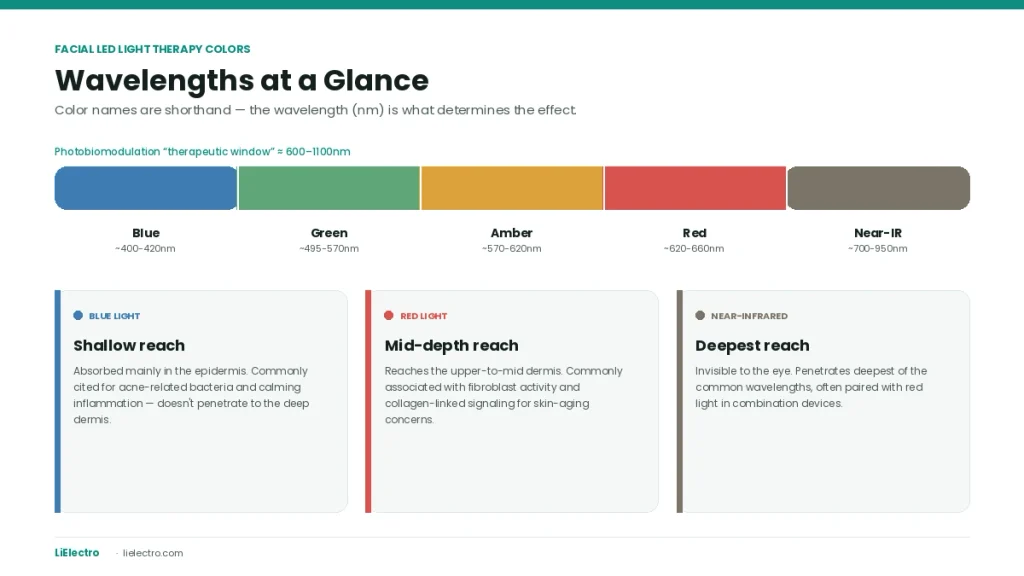
The table below focuses specifically on facial applications rather than general LED light color meanings.
| Facial light color | Common facial application | What to know |
|---|---|---|
| Red | Signs of skin aging and overall skin appearance | Commonly used in facial LED devices for collagen-related skin applications |
| Blue | Acne-prone skin | Commonly used in acne-focused facial LED devices |
| Green | Uneven-looking skin tone and complexion | Frequently marketed for pigmentation and complexion concerns; evidence varies |
| Yellow/Amber | Redness and skin appearance | Used in some devices for redness and complexion-related applications |
| Purple | Combination skin concerns | Often combines red and blue light in the same treatment mode |
| White | General or multi-wavelength treatment | The meaning of white light varies between devices |
| Near-infrared | Skin-aging and repair-related applications | Invisible to the eye and often combined with red light |
These applications are not identical across all devices. Always check the manufacturer’s stated wavelength and intended use rather than choosing a facial LED treatment based only on its visible color.
Which Facial Light Therapy Color Should You Use?
The right facial light therapy color depends on the skin concern you want to address. Some LED face masks also combine multiple wavelengths, allowing different colors to be used in the same device.
For Acne-Prone Skin
Blue light is commonly used in facial LED devices designed for acne-prone skin.
Blue light can interact with compounds produced by Cutibacterium acnes, the bacteria associated with acne. This is why blue light is a common feature in LED devices designed around acne-related applications.
Some facial masks combine blue and red light. In these devices, blue light is generally included for acne-related applications, while red light is used for other aspects of skin appearance.
LED light therapy should not be considered a replacement for an acne treatment plan recommended by a dermatologist. Results can also vary depending on the type and severity of acne.
For Signs of Skin Aging
Red light is one of the most common colors used in facial LED devices for signs of skin aging.
Red light is associated with photobiomodulation, a process in which specific wavelengths of light interact with cells.
Some facial devices also use near-infrared light. Unlike red light, near-infrared light is invisible to the human eye and can penetrate deeper into tissue.
If your main concern is fine lines, loss of firmness, or overall skin texture, don’t choose a device based only on the word “red.” Check its actual wavelength and treatment specifications.
For Uneven-Looking Skin Tone
Green light is frequently marketed for uneven-looking skin tone and pigmentation-related concerns. Some multi-color facial LED devices include a green-light setting for these purposes.
However, claims about green light can vary considerably between devices. A green setting does not automatically mean that the device has been clinically demonstrated to treat a particular pigmentation condition.
If uneven pigmentation is your main concern, evaluate the device’s wavelength, evidence, and intended use instead of choosing green light based only on its color.
For Redness
Yellow or amber light appears on some facial LED devices and is commonly marketed for redness and overall complexion concerns.
The terminology and wavelengths used for yellow and amber light are not consistent across manufacturers. One device’s “yellow” setting may use a different wavelength from another device’s yellow setting.
For that reason, check the actual wavelength listed in the device specifications.
If you have persistent facial redness, identifying the underlying cause is also important. LED light therapy may not address every condition that causes facial redness.
For General Skin Appearance
Some LED face masks offer multiple colors or combination modes instead of focusing on one skin concern.
For example, a device may provide a red mode for skin-aging concerns and a blue mode for acne-prone skin.
Having more treatment colors does not necessarily mean you will get better results. Use each mode according to the manufacturer’s instructions and intended application.
Red vs. Blue vs. Other Facial Light Therapy Colors
Facial LED colors are associated with different applications, but they should not be treated as interchangeable.
| Color | Visible? | Common facial use | What to check |
|---|---|---|---|
| Red | Yes | Signs of skin aging and overall skin appearance | Wavelength and irradiance |
| Blue | Yes | Acne-prone skin | Intended acne-related application |
| Green | Yes | Uneven-looking complexion | Evidence and wavelength |
| Yellow/Amber | Yes | Redness and complexion | Exact wavelength |
| Purple | Yes | Combination treatment | Whether it combines red and blue |
| White | Yes | General or multi-wavelength treatment | What the manufacturer means by “white” |
| Near-infrared | No | Skin-aging and repair-related applications | Wavelength and device specifications |
Think of this table as a starting point rather than a treatment prescription. The same visible color can be delivered differently by different devices, so the wavelength and technical specifications matter more than the color name alone.
Do All LED Face Masks Use the Same Colors?
No. LED face masks do not all use the same colors or wavelengths.
Some devices use only red and near-infrared light, while others combine red and blue. Multi-color masks may also include green, yellow, amber, purple, or white settings.
Even when two masks advertise the same color, they may differ in:
- Wavelength
- Irradiance
- Number of LEDs
- Treatment area
- Recommended session length
- Treatment distance
That makes the number of available colors a poor way to compare facial LED masks. A mask with seven color settings is not automatically more effective than one using two or three specific wavelengths.
How to Choose the Right Color for an LED Face Mask
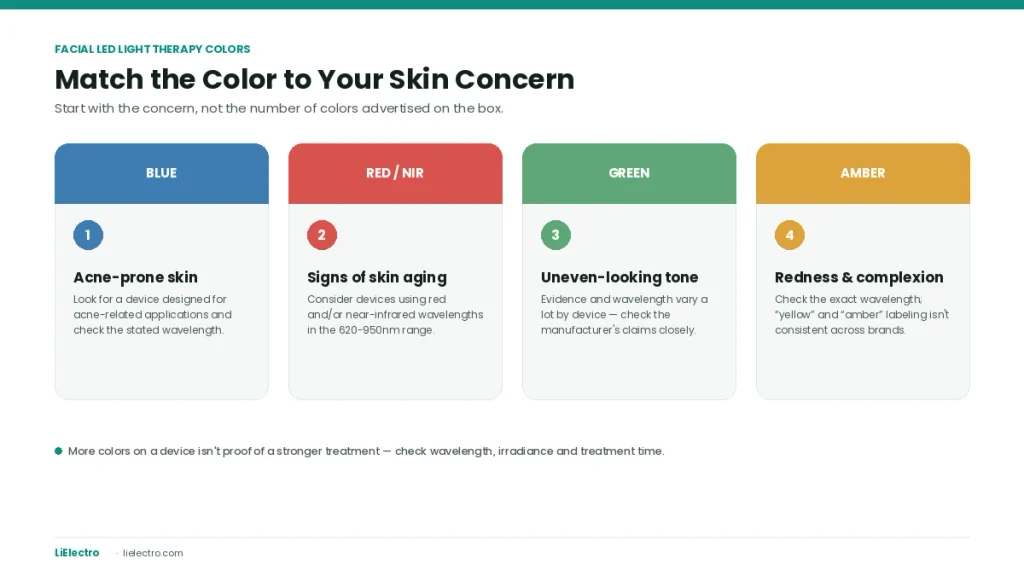
Start with your target skin concern, not the number of colors advertised on the box.
Consider Your Target Skin Concern
Identify what you actually want the device to address.
For example:
- Acne-prone skin: Look for a device specifically designed for acne-related applications.
- Signs of skin aging: Consider devices using red and/or near-infrared wavelengths.
- Uneven-looking skin tone: Check the evidence and specifications behind the device’s color claims.
- Redness: Check the wavelength and intended application rather than relying on the color name.
If a mask offers several colors, check what each mode is designed to do.
Check the Wavelength
Don’t rely only on labels such as red, blue, or green.
Look for the wavelength in nanometers (nm) in the product specifications. This gives you more useful information about the actual light being delivered than the visible color alone.
Look at the Device Specifications
Check the manufacturer’s information for:
- Irradiance
- Treatment distance
- Treatment area
- Recommended session duration
- Wavelength
A device that clearly provides these specifications is easier to evaluate than one that mainly advertises how many colors it has.
Follow the Treatment Instructions
Use the treatment duration and frequency recommended by the manufacturer.
Longer sessions are not automatically better. If the device is designed to be used at a particular distance from the face, follow that requirement rather than moving it closer.
Check Whether It Uses Single or Combination Wavelengths
Some LED masks allow you to select one color at a time. Others combine multiple wavelengths in a single mode.
A combination mode may be designed to address more than one facial concern, but don’t assume that more colors automatically mean a stronger treatment. Check which wavelengths the mode actually uses and what the manufacturer recommends it for.
Facial LED Light Therapy Safety Tips
LED light therapy is non-invasive, but facial LED devices still need to be used according to their instructions.
Keep these points in mind:
- Follow the manufacturer’s recommended treatment time and frequency.
- Use the device only for its intended facial application.
- Check whether protective eyewear is required.
- Avoid staring directly into high-intensity LEDs unless the device is specifically designed for that use.
- Stop using the device if it causes significant irritation, pain, or an unusual skin reaction.
- Take additional precautions if you use medication that increases sensitivity to light.
- Consult a healthcare professional if you have a photosensitive condition or are unsure whether LED treatment is appropriate for you.
LED light therapy can be part of a skincare routine, but it should not replace appropriate medical treatment for persistent acne, significant pigmentation, unexplained redness, or other skin conditions.
FAQs
What color LED light is best for the face?
There is no single best color for every facial concern. Red and near-infrared light are commonly used for signs of skin aging, while blue light is commonly used for acne-prone skin. The appropriate choice depends on your goal, the device’s wavelength, and its treatment specifications.
What color LED light is best for acne?
Blue light is commonly used in facial LED devices for acne-prone skin. Some devices combine blue and red wavelengths for a broader treatment approach.
What color LED light is best for anti-aging?
Red light is commonly used in facial LED devices for signs of skin aging, and some devices also include near-infrared light. When choosing a device, check its actual wavelength and treatment specifications rather than selecting a mask based only on its color