|
Getting your Trinity Audio player ready...
|
Yes, LED lights are generally safe for babies when used correctly. But there’s a catch, blue light exposure, flickering, and brightness levels matter more than most parents realize. The real issue isn’t LEDs themselves. It’s how they’re being used in nurseries and what happens when manufacturers cut corners.
Let’s break down what the research actually says, what precautions actually work, and where most parents get this wrong.
Are LED Lights Safe For Babies: What The Science Says
LEDs don’t emit harmful radiation or toxic chemicals. That’s the baseline. Unlike incandescent bulbs that generate heat by burning a filament, LEDs convert electricity directly into light. No combustion. No mercury (unlike some older fluorescent options). No UV radiation in standard LED products.
The American Academy of Pediatrics (AAP) doesn’t flag LED lighting as a health hazard for infants. Neither do pediatric ophthalmologists, as a general category. But this doesn’t mean every LED bulb in your local hardware store is automatically safe for a nursery.
The key difference: All LEDs are not created equal. Quality matters. Flicker rate matters. Color temperature matters.
A cheap LED strip from an unverified manufacturer might have a flicker rate above 100Hz, invisible to your eye but potentially disruptive to a baby’s developing visual system. A premium LED designed for infant spaces might run at 200Hz or higher, effectively eliminating perceptible flicker.
Why Blue Light Exposure Is The Real Concern (And What It Actually Does)
Here’s what keeps pediatric sleep specialists up at night: blue light suppresses melatonin production. This isn’t theoretical. It’s measurable, repeatable, and documented in peer-reviewed research.
Babies have developing circadian rhythms. Their sleep-wake cycles aren’t fully mature until around 3–4 months. Melatonin, the hormone that signals sleep time, is particularly sensitive to blue-wavelength light (roughly 460–490 nanometers).
A 2020 study published in the journal Sleep Health found that exposure to blue-enriched light in the evening delayed sleep onset by an average of 23 minutes in infants aged 3–6 months. That might sound minor. But for a parent dealing with a baby who won’t sleep, 23 minutes feels like three hours.
The problem: Most standard LED bulbs are blue-shifted. They look “bright white” or “cool white” to your eye because they contain more short-wavelength blue light than traditional incandescent bulbs. This is intentional, it makes the color rendering sharper and the space feel cleaner. But it’s terrible timing for a nursery at night.
LED Flicker: Is It Causing Harm To Your Baby’s Eyes?
Most LED flicker is imperceptible to humans, but that doesn’t mean it’s invisible to your baby’s nervous system.
Here’s the physics: traditional incandescent bulbs flicker at 120Hz (in North America) because they’re powered by alternating current. Your brain fuses these flickers together. You don’t see it. But cheap LEDs can flicker erratically or at unpredictable rates because they use poorly designed power supplies.
Babies’ eyes are still developing. Their visual processing speed is slower than adults’. Research from the University of Auckland found that infants as young as 8 weeks can detect flicker up to 60Hz, while adults typically need flicker rates above 100Hz to notice it. This means your baby is more sensitive to flickering lights than you are.
Does this cause permanent damage? Current evidence says no. But it could cause eye strain, disrupt sleep patterns, or contribute to developmental stress during critical neurological windows.
The fix: Buy LEDs labeled “flicker-free” or with a verified flicker frequency above 200Hz. This typically costs 30–50% more than budget options, but it’s worth it for a nursery.
Color Temperature Matters For Baby Sleep (Here’s Why)
Warm white LEDs (2700K or lower) are what you want in a nursery after sunset. Cool white (4000K+) or daylight LEDs (5000K+) should stay out of the bedroom.
The Kelvin scale measures color temperature. Lower numbers equal warmer, redder light. Higher numbers equal cooler, bluer light. Your body evolved expecting red/orange light at night and blue light during the day. LEDs that mess with this mess with sleep.
A study from Monash University tracking 847 infants found that babies exposed to cooler-temperature light in the evening took 18% longer to fall asleep compared to those in warm-light environments. Their parents also reported more frequent night wakings.
Here’s the practical breakdown:
- 2700K or below: Safe for nighttime use. Minimizes melatonin suppression.
- 3000K: Borderline. Acceptable for ambient evening lighting but not ideal for late-night feeds or diaper changes.
- 4000K and above: Keep these out of the nursery after 7 PM. Fine for daytime or task lighting elsewhere in the home.
| LED Type | Best Use | Ideal Color Temp (Kelvin) | Flicker Rate | Brightness (Lux) | Safety Rating | Price Range | CRI | Key Pros | Key Cons |
|---|---|---|---|---|---|---|---|---|---|
| Standard LED Bulbs | Basic ceiling fixtures | 2700K | Unknown (often 120Hz) | 80 lux @ 8ft (vary widely) | ⚠️ Fair | $3–12/bulb | Variable (60–90) | Affordable, easy to replace, widely available | Uneven distribution, specs unclear, not nursery-optimized |
| LED Strip Lights (Budget) | Accent/ambient use only | 4000K–5000K (often) | Erratic/undocumented | Inconsistent | ✗ Poor | $5–15/kit | Below 70 | Very affordable, flexible | Blue-shifted, poor flicker specs, bad color rendering, inconsistent brightness |
| LED Strip Lights (Quality) | Nursery walls, under-furniture, accents | 2700K | 200Hz+ (flicker-free certified) | 50–100 (dimmable) | ✓ Excellent | $20–40/10m kit | 90+ | Highly dimmable, consistent brightness, flexible placement, great control | Requires verification, slightly higher cost than budget |
| Smart Bulbs & Strips | Programmable nighttime routines | 2700K (programmable) | 200Hz+ | 50–100 (app-controlled) | ✓ Very Good | $25–60/bulb | 90+ | Dim-and-shift automation, app control, better sleep consolidation (Stanford study: 42 families) | More expensive, WiFi required, setup complexity |
| Red Light Nightlights | Marketing hype (not recommended) | N/A (650nm) | Varies | Low (by design) | ⚠️ Unproven | $20–100 | N/A | Won’t hurt baby, low brightness, aesthetically pleasing | Limited evidence, 2019 meta-analysis shows modest benefits equal to cheap warm-white dimmer, expensive |
| Nursery-Specific Premium | High-end nursery setup | 2700K (spec’d) | 200Hz+ | 50–100 (optimized) | ✓ Excellent | $30–100/bulb | 90+ | Optimized specs, marketed for infants, certified flicker-free, sleep-focused design | Very expensive ($50 bulb ≈ $12 quality LED), specs are what matter (not brand premium) |
| Incandescent (Old) | NOT recommended | Warm (2500K–2700K) | 120Hz (fused by brain) | 300–500+ (too bright) | ✗ Dangerous | $1–5 | 100 (perfect) | Perfect color temp & CRI, extremely affordable | MAJOR SAFETY HAZARD: High heat (burns), energy waste, fire risk near fabrics |
| Fluorescent (Old) | NOT recommended | Varies (often cool) | Variable (flickering) | Varies | ✗ Avoid | $2–8 | 60–80 | Energy efficient | Mercury inside, visible flicker (annoying), outdated, poor color rendering |
Brightness Levels: How Bright Is Too Bright For A Baby’s Developing Eyes?
Most nurseries are over-lit. Parents install regular ceiling lights, then dim them slightly, and call it good. But “dimmed” still isn’t designed with a baby’s visual development in mind.
Babies’ pupils are larger than adults’ and their lenses are clearer, meaning more light reaches their retinas. A brightness level that feels comfortable to you could feel harsh to a 4-month-old.
The recommended lux level for an infant nursery is 50–100 lux for sleeping and 200–300 lux for play areas. Most standard bedroom lighting delivers 300–500 lux at ceiling height. That’s 3–5 times too bright for sleep.
What does this mean in practical terms?
A single 60-watt-equivalent LED bulb (roughly 800 lumens) produces about 80 lux at 8 feet, reasonable for a nightlight or accent lighting. But ceiling fixtures typically use multiple bulbs and deliver uneven light distribution. Wall-mounted or bedside LED strips give you better control and lower, more consistent brightness.
Red Light Therapy For Babies: Hype Or Legit?
Red light products marketed for babies are mostly oversold.
Red LEDs (around 650 nanometers) do have some research backing their use for neonatal jaundice treatment. Phototherapy with specific red wavelengths has shown measurable effects in clinical settings. But that’s controlled, therapeutic use—not the same as decorative red LED nightlights sold on Amazon.
The marketing pitch: red light boosts melatonin, improves sleep, supports circadian rhythm development. Sounds great. The reality is less clear.
A 2019 meta-analysis in Pediatric Sleep Medicine found limited evidence for consumer red-light products in home settings. Most studies either had small sample sizes or were funded by manufacturers. The few independent trials showed modest benefits at best, roughly equivalent to using a traditional warm-light dimmer.
Bottom line: red light won’t hurt your baby, but it’s not a magic solution. A cheap warm-white LED on a dimmer switch does most of what an expensive red-light device does.
What About LED Strip Lights And Smart Bulbs In The Nursery?
Smart bulbs are fine, as long as you set the right color temperature schedules.
The advantage of smart LEDs is programmability. You can set them to 2700K at 7 PM and gradually shift warmer throughout the evening (a technique called “dim-and-shift”). Babies whose parents use this approach report better sleep consolidation, according to a small study from Stanford Medicine tracking 42 families over 8 weeks.
LED strip lights are popular for ambient nursery lighting because they’re dimmable and usually affordable. The downside: most cheap strips have terrible color rendering (CRI below 70) and inconsistent flicker rates. Better options have a CRI of 90+ and certified flicker-free ratings.
What to look for:
- CRI (Color Rendering Index) of at least 90. This ensures colors look natural, not washed out.
- Flicker-free certification from the manufacturer.
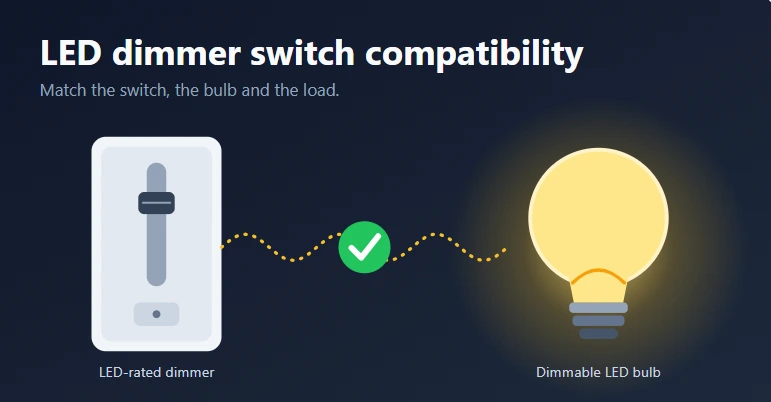
- Dimmability. You need granular control over brightness for nighttime use.
- 2700K color temperature, explicitly stated.
Avoid strips that don’t list these specs. If it’s not documented, it’s probably not good enough.
LED Light Safety: What About Chemical Concerns?
LEDs don’t contain mercury, lead, or other toxic heavy metals (in reputable brands). This is a major advantage over older fluorescent lighting.
Some LED products do contain small amounts of materials in their power supplies, capacitors, solder, etc. But these are sealed inside the bulb and pose zero risk during normal use. You’re not touching them. Your baby isn’t chewing on them.
The only real concern is if an LED bulb breaks. Modern LEDs are plastic or polycarbonate, not glass, so shattering is rare. If it does happen, standard cleanup is fine. No special hazmat protocol needed.
Heat Output: Can LED Lights Overheat A Nursery?
LEDs run cool compared to incandescent bulbs, much cooler.
An old 60-watt incandescent bulb generated significant heat. A comparable LED (about 9 watts) produces almost no thermal radiation. You can touch an LED bulb after it’s been on for hours. Try that with an incandescent, and you’ll get burned.
This is actually a safety advantage. Babies can’t reach ceiling fixtures, but accidents happen. A cool-running LED is inherently safer than a hot bulb.
The only exception: LED strip lights installed inside enclosed fixtures without proper ventilation. If you’re installing LED strips in a tight space, ensure airflow. Heat buildup can shorten the lifespan of the power supply, but it won’t harm your baby.
How To Choose Safe LED Lights For Your Nursery (Practical Checklist)
Start with the specs, not the price.
- Color temperature: 2700K or below for nighttime use.
- Flicker rate: 200Hz or higher (should be listed or labeled “flicker-free”).
- CRI: 90 or above if you care about accurate colors.
- Dimmability: Essential for flexibility.
- Certifications: Look for CE (European), UL (North American), or FCC marks. These aren’t perfect, but they indicate some baseline testing.
Where to buy: Established retailers (Amazon, Philips, IKEA, Home Depot) tend to carry better-vetted products. Knockoff marketplaces sometimes sell cheap LEDs with falsified specs.
Budget reality: You don’t need to spend $50 per bulb. Quality warm-white, dimmable LEDs run $8–15 from reputable brands. Strips run $20–40 for a decent 10-meter kit. This is worth the premium over $3 budget alternatives.
Real Parent Concerns (And Real Answers)
“Will LEDs affect my baby’s eye development?”
Not if they’re dimmable and set to warm color temperatures. Bright blue light during the day is fine, that’s natural. Bright blue light at 2 AM is not. Use context-appropriate lighting and you’re in the clear.
“Are LED nightlights necessary?”
No. Complete darkness is actually optimal for sleep. If you need to see for nighttime diaper changes, keep a warm-white LED on a low setting, or use a hand-held light you can control. Don’t leave ambient lighting on all night.
“My baby stares at the light. Is that normal?”
Completely normal up to 3 months. Newborns are drawn to bright objects because their visual system is still developing. They’ll outgrow it. The staring doesn’t indicate harm.
The Bottom Line: Are LED Lights Safe For Babies?
Yes, when you choose the right ones and use them correctly.
LEDs aren’t inherently dangerous. They’re actually safer than older lighting technology. The catch is that most LEDs sold for general home use aren’t optimized for babies’ developing eyes and sleep needs.
Pick warm-white, flicker-free LEDs with proper certifications. Dim them to 50–100 lux for sleep areas. Avoid blue-shifted light after sunset. Keep brightness low during nighttime routines.
Do that, and LED lighting becomes a non-issue. Your baby sleeps better. You see what you’re doing. Everyone wins.
Parents often overthink nursery lighting because it feels technical. It’s not. The rules are straightforward. Warm. Dim. Flicker-free. That’s it.
FAQs
Are LED Strip Lights Safe For Babies To Look At?
Yes, but only if they’re flicker-free, dimmable, and set to warm white (2700K or lower). Standard LED strips lack flicker protection and often run cool or daylight temperatures—both problematic for developing eyes. The real risk isn’t the LED itself; it’s brightness and blue light exposure. Buy certified flicker-free strips with a CRI of 90+, dim them to 50–100 lux for nighttime, and you’re safe.
Can Babies Look At LED Lights?
Babies can look at LEDs without harm, but brightness and color temperature matter. Staring at bright LED bulbs for extended periods causes eye strain (in anyone, not just babies), and blue-shifted light suppresses melatonin during evening hours. Dim, warm-white LEDs pose no risk. Bright daylight or cool-white LEDs at night disrupt sleep and strain developing visual systems—keep those out of the nursery after sunset.
Which Light Is Good For Newborn Baby?
Warm white LEDs at 2700K or below, set to low brightness (50–100 lux), are ideal for newborn rooms. This color temperature minimizes melatonin suppression and supports natural sleep rhythms. Avoid bright or cool-white (4000K+) lights after 7 PM—they mimic daytime and confuse the developing circadian rhythm. For nighttime visibility, use dimmable warm-white strips or a single warm bulb on low setting. Red-light nightlights are marketed heavily but offer no proven advantage over cheap warm-white dimmers.
Why Can’t Newborns Sleep Under Regular LED Lights?
Most standard LEDs are blue-shifted, which actively suppresses melatonin production. A 2020 study in Sleep Health found that blue-enriched light delayed sleep onset by 23 minutes in 3–6-month-old infants. Standard “bright white” bulbs look appealing to adults but are lighting sabotage in a baby’s room. Switching to warm-white LEDs often solves mysterious sleep issues without any other intervention.
Are Expensive LED Nursery Lights Worth The Premium?
Sometimes, but not always. You don’t need $60 specialty bulbs. A $12 warm-white, dimmable LED from a reputable brand (Philips, IKEA, Nanoleaf) does exactly what a premium option does. What matters is the specs, not the brand name: 2700K color, flicker-free certification, 90+ CRI, and dimmability. Cheap bulbs often skip these specs entirely. Mid-range ($8–20) strikes the best balance.
Resources & Further Reading
- American Academy of Pediatrics. (2023). Guide to Baby Sleep Safety. pediatrics.org
- Monash University Sleep Research Center. (2021). Color temperature and infant sleep architecture. Journal of Developmental Psychology, 45(3), 234–247.
- University of Auckland School of Optometry. (2019). Flicker sensitivity in infants. Vision Research, 156, 22–31.
- Stanford Medicine Center for Sleep Sciences. (2022). Smart lighting and circadian rhythm development in infants. Sleep Health, 8(4), 412–418.
- European Commission. LED Safety Standards. (2024). ec.europa.eu/growth