
|
Getting your Trinity Audio player ready... |
LED light therapy color benefits depend on the wavelength, device, treatment settings, and skin concern. Red light is studied for some signs of skin ageing, blue light for acne, and other colors for selected cosmetic applications. However, the evidence is not equally strong for every color.
If you’re comparing different light therapy colors, this guide explains their potential skincare benefits, the limitations of current research, and how to choose a color based on your needs.
LED Light Therapy Colors Benefits at a Glance
| LED light color | Commonly studied or marketed use | Evidence to keep in mind |
|---|---|---|
| Red | Fine lines and skin rejuvenation | Human studies support further investigation for selected cosmetic outcomes |
| Blue | Acne-prone skin | Evidence supports some acne-focused applications, depending on the treatment |
| Purple / violet | Combined red-and-blue skincare | Benefits depend on the device; evidence for purple as a separate treatment is limited |
| Green | Uneven pigmentation and dark spots | Evidence for LED green light is limited and device-dependent |
| Yellow / amber | Redness and overall skin appearance | Clinical evidence for specific outcomes remains limited |
| Cyan | Calming or soothing skin | Strong clinical evidence for specific skincare benefits is lacking |
| White | General cosmetic skin rejuvenation | One clinical trial investigated a specific white-light protocol for wrinkles |
| Near-infrared | Selected skin and tissue-related applications | It is invisible light, not a visible color; evidence depends on the application |
Quick takeaway: Choose a device based on evidence for your particular skin concern, not simply the number of colors it offers.
1. Red LED Light Therapy Benefits
Red LED light therapy is commonly studied for cosmetic skin rejuvenation, including the appearance of fine lines and wrinkles.
Potential areas of benefit include:
- Fine lines: Some clinical studies have reported improvements in selected wrinkle measurements.
- Skin appearance: Red-light treatments are being investigated for changes in skin texture and overall appearance.
- Skin-related recovery: Photobiomodulation research explores how particular light doses may affect cellular processes and tissue responses.
What the evidence means: Results vary according to wavelength, dose, device, and treatment protocol. Red light is not a guaranteed way to erase wrinkles or reverse skin ageing.
Best fit: Readers interested in light-based treatments for selected signs of skin ageing.
2. Blue LED Light Therapy Benefits
Blue LED light therapy is commonly associated with acne-focused skincare. Certain blue wavelengths can activate light-sensitive compounds associated with Cutibacterium acnes, a bacterium involved in acne development.

Blue Light Therapy Device with Dual Chip
The BONTANNY blue light therapy lamp features a precise blue light wavelength, penetrating surface skin layers and improve skin health.
Buy from Amazon Potential benefits being investigated include:
- Acne management: Some blue-light treatments have shown benefits for selected acne outcomes.
- Blemish-focused care: Blue light is used in some devices designed for acne-prone skin.
- Complementary treatment: Depending on the device and acne severity, light therapy may be considered alongside an appropriate skincare or medical treatment plan.
What the evidence means: Results are not guaranteed, and blue LED treatment may not be sufficient for severe, cystic, or hormonally influenced acne. Do not assume that blue light alone treats every cause of breakouts.
Best fit: People exploring light-based options for mild acne, after checking whether the device is appropriate for their condition.
3. Purple LED Light Therapy Benefits
Purple LED light therapy often combines red and blue light, although the wavelengths and output vary by device.
Because purple settings may combine different wavelengths, their potential effects depend on the actual light produced rather than the color shown on the mask.
Potential applications include:
- Combined acne-focused and cosmetic treatment: Some devices combine red and blue settings.
- Convenience: A combined setting may let users access more than one light mode in a single device.
- Targeted skincare routines: The usefulness of a purple setting depends on whether its wavelengths and dose are appropriate for the intended concern.
What the evidence means: Evidence for red and blue light individually cannot automatically prove that a purple setting delivers the same benefits. There is limited direct evidence establishing purple light as a distinct treatment with superior results.
Best fit: People considering a combined red-and-blue device who have checked its specifications and evidence.
For a more detailed discussion, read our guide to Purple LED Light Therapy Benefits: Acne, Skin & Evidence.
4. Green LED Light Therapy Benefits
Green LED light is frequently marketed for uneven skin tone, pigmentation, and dark spots. However, marketing claims should not be confused with established clinical outcomes.
Areas of interest include:
- Uneven-looking skin tone: Green light is marketed for cosmetic pigmentation concerns.
- Dark spots: Some devices claim to target the appearance of discoloration.
- Complementary skincare: A light device may be considered alongside sun protection and treatments suited to the cause of pigmentation.
What the evidence means: Evidence that green LED light reliably fades dark spots is limited. Pigmentation can result from sun exposure, post-inflammatory changes, melasma, and other conditions, each of which may need a different approach.
Best fit: People researching green-light devices for uneven-looking skin tone, provided they understand the limitations.
For persistent or worsening pigmentation, consult a dermatologist rather than relying on LED color alone.
5. Yellow LED Light Therapy Benefits
Yellow or amber LED light is marketed for redness, dull-looking skin, and overall skin appearance. These settings can differ substantially between devices.
Potential areas of interest include:
- Skin appearance: Some devices are marketed for a brighter or more even-looking complexion.
- Redness: Yellow-light treatments are promoted for redness, but strong evidence for specific outcomes is limited.
- Cosmetic routines: Yellow light may be included in multi-color devices, although its inclusion does not prove additional benefits.
What the evidence means: Claims that yellow light reliably reduces swelling, increases lymphatic drainage, or treats rosacea should not be accepted without appropriate clinical evidence.
Best fit: Readers comparing yellow-light settings for cosmetic use who want realistic expectations.
6. Cyan LED Light Therapy Benefits
Cyan LED light usually refers to a blue-green portion of the visible spectrum. Some skincare devices market it as a soothing option for irritated-looking or redness-prone skin.
Potentially relevant uses promoted by manufacturers include:
- Soothing skin appearance: Some devices claim a calming cosmetic effect.
- Redness-focused routines: Cyan settings are marketed for skin that appears flushed.
- Multi-color treatment: Cyan may be included as an additional setting in a multi-color LED mask.
What the evidence means: Clinical evidence establishing cyan LED light as an effective treatment for rosacea, inflammation, or other specific skin conditions remains limited. The presence of a cyan mode does not establish that it is more effective than other colors.
Best fit: People comparing multi-color devices, rather than anyone seeking a proven standalone treatment for a medical skin condition.
7. White LED Light Therapy Benefits
White LED devices may emit a broad range of visible wavelengths rather than one narrow band. Their output can vary considerably between products.
White light has been investigated for selected cosmetic outcomes, including wrinkles. In a 2017 clinical trial, researchers compared a specific white-light protocol with red LED light for wrinkles around the eyes. Both groups improved on some instrumental measurements.
Potential areas of interest include:
- Fine lines: A specific white-light treatment protocol has been studied for periocular wrinkles.
- Cosmetic skin appearance: Research has examined selected measurements related to skin ageing.
- Non-invasive skincare: LED devices do not use needles or intentionally remove the skin’s outer layer.
What the evidence means: One clinical trial does not establish that every white LED mask improves wrinkles, stimulates collagen, or fades dark spots. White light is not one standardized therapeutic wavelength or dose.
Best fit: People evaluating a white LED device with transparent specifications and evidence relevant to their intended use.
See our article Top 5 White LED Light Therapy Benefits for a focused look at white-light skincare research.
8. Near-Infrared Light Therapy Benefits
Near-infrared (NIR) is included in many light-therapy discussions, but it is important to distinguish it from visible LED colors: near-infrared light is not visible to the human eye.
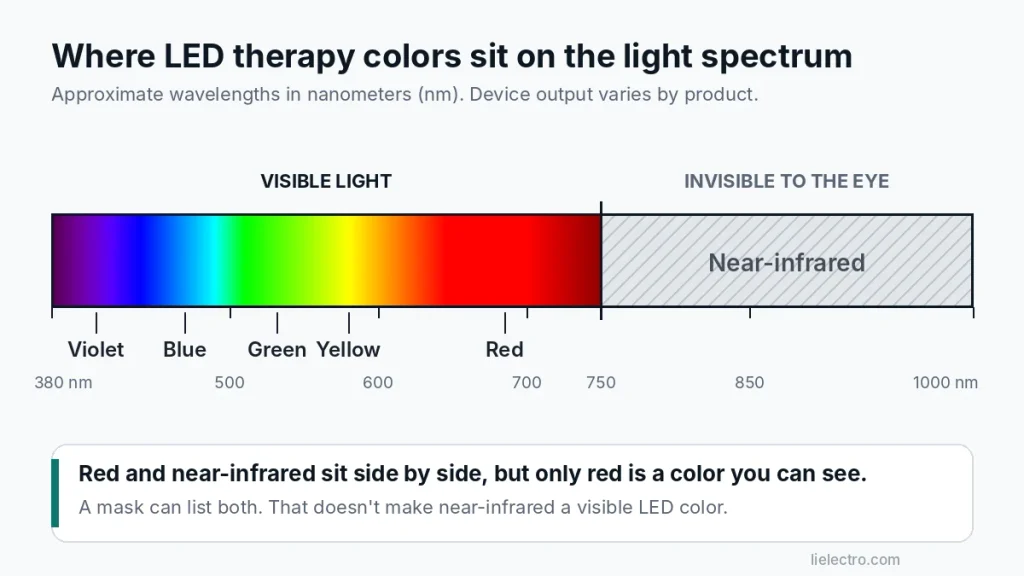
NIR devices are investigated for selected applications involving photobiomodulation and tissue responses. However, the results depend on the wavelength, dose, device, and treatment goal.
Keep these points in mind:
- It is not a visible color: A device may include NIR alongside red LEDs.
- It is not automatically more effective: Greater wavelength does not mean better results for every concern.
- Evidence is application-specific: Findings from research on one tissue or condition should not automatically be applied to cosmetic facial skincare.
Best fit: Readers comparing devices that include both red and near-infrared settings, after reviewing the evidence for their intended use.
How to Choose the Right LED Light Color for Your Skin
Choose a light color based on your skin concern, while keeping in mind that evidence varies by color and device. In addition, frequency of led therapy usage varies by your need and instructions.
- For fine lines: Consider researching red LED devices and the clinical evidence for wrinkle-related benefits.
- For acne: Look into blue-light devices designed for acne. More severe or persistent acne may require medical treatment.
- For multiple skin concerns: Compare each color’s wavelength, device specifications, and supporting evidence. More color settings do not necessarily mean better results.
- For dark spots or persistent redness: Identify the underlying cause before choosing a light treatment. Evidence for green, yellow, and cyan LED settings remains limited for many marketed claims.
Tip: No LED light color is best for every skin concern. Check your device’s instructions and consult a dermatologist if you have a persistent skin condition.

8 Colors LED Light Therapy Machine
All in one solution machine reporting wonders for skin.
Buy from Amazon Before buying a device, check its wavelength specifications, treatment instructions, eye-protection requirements, and evidence for the intended use. If you have a photosensitive condition, take medication that increases light sensitivity, or are treating a diagnosed skin disorder, seek professional advice.
What Determines the Effectiveness of LED Light Therapy?
The color alone cannot tell you whether a treatment will work. Four factors matter:
- Wavelength: Determines the type of light emitted and helps define the treatment being studied.
- Dose and intensity: The amount of light delivered and the exposure time affect the treatment protocol.
- Device design: Different products can emit different wavelengths and levels of light, even when they display the same color.
- Skin concern: Evidence for acne, wrinkles, and other conditions is not interchangeable.
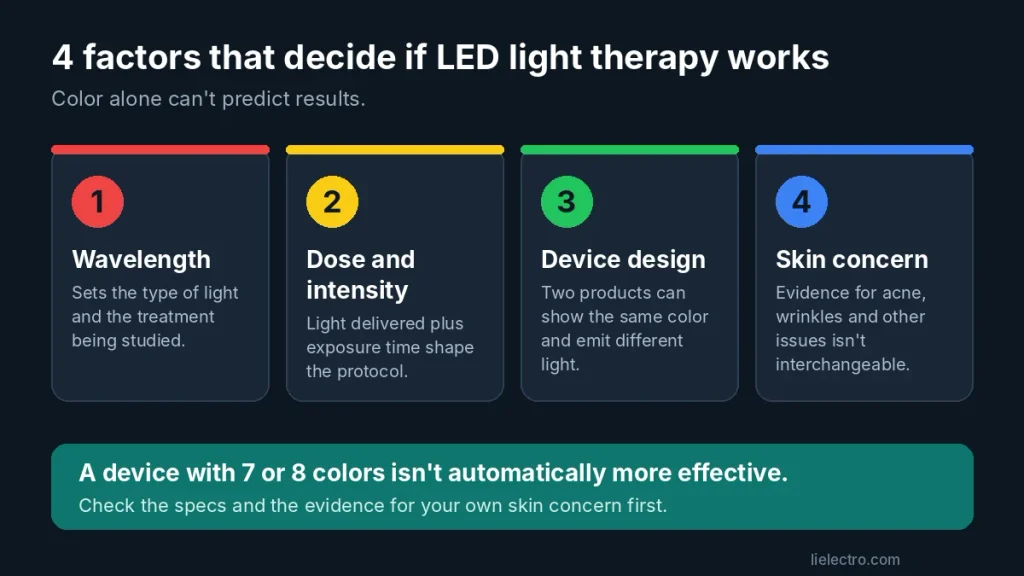
A device with seven or eight colors is not automatically more effective than one with fewer settings. Choose based on suitable evidence and clear technical information. For facial led light therapy, check our detailed guide.
Final Takeaway
The main benefit of understanding LED light therapy color benefits is being able to compare treatment options without relying on marketing claims.
Red and blue LED light have been studied for selected skincare applications, while evidence for green, yellow, cyan, purple, and white settings varies. Near-infrared is a separate, invisible part of the light spectrum, not another visible color.
Before choosing a device, match its specifications and supporting evidence to your skin concern. A greater number of different color light therapy does not guarantee better results, and LED light therapy should not replace appropriate medical care.
FAQs
Can I use LED after a chemical peel?
Yes, wait 48 hours, then stick to red or yellow for gentle repair.
Will one color light be enough?
Single concern? Sure. But combo therapy layers benefits like skincare lasagna. (Blue + red is my go-to for acne.)
What if I have deep skin tone?
LED is color-blind, wavelengths work on every Fitzpatrick type.
Any special aftercare?
Reach for post blue light cream with niacinamide or post red light cream packed with peptides to lock in calm and collagen.
What is the difference between IPL and LED light therapy?
IPL uses intense pulsed light for pigmentation and hair removal, while LED therapy uses gentle wavelengths to heal and refresh skin.
Does cyan LED light therapy help rosacea?
There is insufficient strong clinical evidence to establish cyan LED light therapy as a reliable rosacea treatment. Persistent facial redness should be assessed by a qualified healthcare professional.
Can I use multiple LED colors for skin in one session?
That depends on the device’s instructions and the evidence for its specific treatment modes. Do not combine or extend sessions on the assumption that more light or more colors will improve results.
Leave a Reply