
|
Getting your Trinity Audio player ready... |
How often you should use LED light therapy at home depends on your device, its intended use, and the manufacturer’s treatment instructions. Some devices are designed for daily sessions, while others recommend treatment only a few times per week. Session length also varies, so there is no single schedule that works for every LED mask, wand, or panel.
If you’re wondering about red light therapy time, the length of a red light therapy session, or whether you can use an LED mask every day, this guide explains how to build a sensible routine without overusing your device.
Quick overview
How often you should use LED light therapy at home depends on your device’s manufacturer instructions. Some masks are designed for daily sessions, others only a few times per week, and session length varies by device and light color. Don’t exceed the stated frequency or duration, and stop if you notice irritation, pain, or new dark patches.
How Often Should You Use an LED Face Mask?
Use your LED face mask according to the instructions supplied with that particular model. Different masks may use different wavelengths, light outputs, and treatment protocols, even if they look similar or offer the same colors. For more understanding, check our detailed chart for color therapy with its wavelength.
Before starting, check:
- Recommended frequency: Daily, several times a week, or another schedule specified by the manufacturer.
- Session duration: The exact number of minutes per treatment.
- Intended use: Whether the device is designed for acne, cosmetic skin rejuvenation, or another purpose.
- Safety precautions: Eye protection, photosensitivity warnings, and any restrictions for your skin or health.
- Maintenance instructions: Whether the manufacturer specifies a maintenance schedule after the initial treatment period.
Do not copy a schedule from another brand’s website or a social media routine. A protocol designed for one device may not be appropriate for another.
The American Academy of Dermatology notes that at-home red-light devices vary and that the ideal treatment frequency and duration remain areas where more research is needed. Read the AAD’s red light therapy guidance.
How Long Should Each LED Light Therapy Session Last?
The length of an LED session depends on the device’s output, treatment design, intended use, and instructions. Some devices use short sessions, while others require longer exposure.
There is no universal session duration for every LED face mask, wand, or panel. Understand led lights for facial therapy, if needed.
Red light therapy time
The length of a red light therapy session varies between devices. Check the manufacturer’s instructions for the exact treatment time and recommended frequency.
Keep these points in mind:
- Do not assume a longer session will improve results.
- Do not increase the light intensity or exposure time unless the device instructions specifically allow it.
- Do not assume that a professional treatment protocol can be copied at home.
- Stop and seek advice if treatment causes persistent irritation, pain, or unusual skin changes.
Consistency matters, but it should always stay within the recommended treatment protocol.
How long should blue light therapy last on the face?
Blue LED devices designed for acne have different treatment instructions. The American Academy of Dermatology notes that some at-home acne light devices may require treatment twice daily for 30–60 minutes over four to five weeks. That is an example of certain devices, not a recommendation for every blue-light mask.
Other products may prescribe a substantially different schedule. Follow the instructions for your exact device and consult a dermatologist if your acne is persistent, severe, or causing scarring.
A Weekly At-Home LED Light Therapy Routine
A safe routine begins with the instructions for your specific device, not a universal weekly timetable.
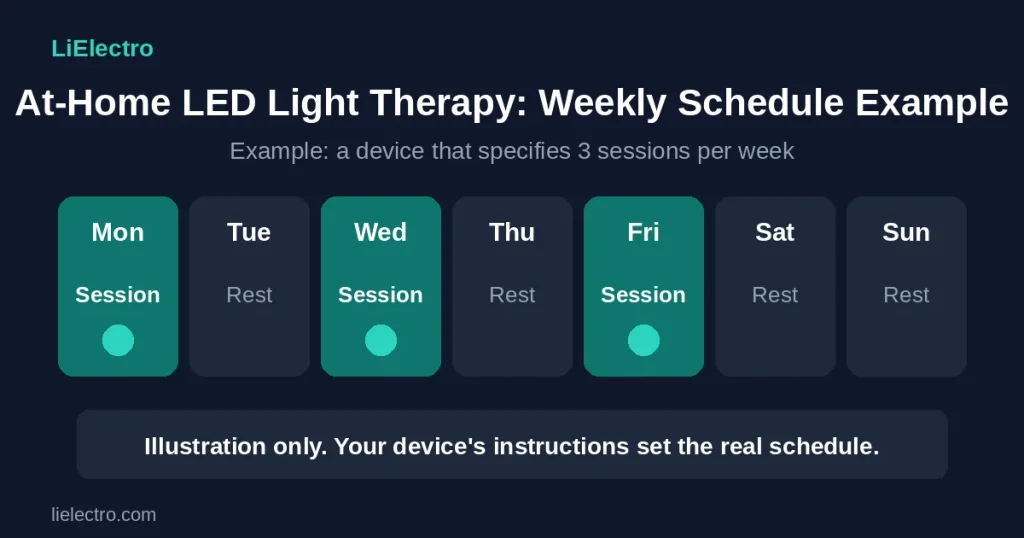
Use this simple planning framework:
- Check your device’s schedule. Write down the recommended session frequency and duration.
- Choose realistic treatment days. If your device recommends several sessions per week, add those sessions to your calendar
- Keep each session within the stated limit. Do not add extra sessions because you missed a day.
- Monitor your skin. Note any irritation, unusual sensitivity, or worsening pigmentation
- Review progress periodically. Assess changes over the timeframe recommended for your device rather than expecting immediate results.
For example, if your instructions specify three sessions per week, schedule those three sessions with the spacing recommended by the manufacturer. Do not turn that example into a daily routine unless your device permits it.
Can You Use LED Light Therapy After Other Skincare Treatments?
Your skincare routine can affect how comfortable your skin feels during LED treatment. However, there is no single preparation routine that applies to every device or skincare product.
Before combining LED therapy with other treatments:
- Follow the device’s guidance about cleansing and applying skincare products.
- Avoid applying a product specifically to increase light penetration unless it is part of a validated protocol recommended by a qualified professional.
- Ask your dermatologist about combining LED treatment with prescription acne medicines, retinoids, chemical peels, or other procedures if you experience irritation or photosensitivity.
- Seek professional advice before using a device on skin that is healing after a procedure.
Do not assume that adding a serum, spray, or other product will make LED therapy more effective.
How to Track Your LED Light Therapy Results
LED light therapy does not produce the same results for everyone. Tracking your experience can help you determine whether your routine is worthwhile.
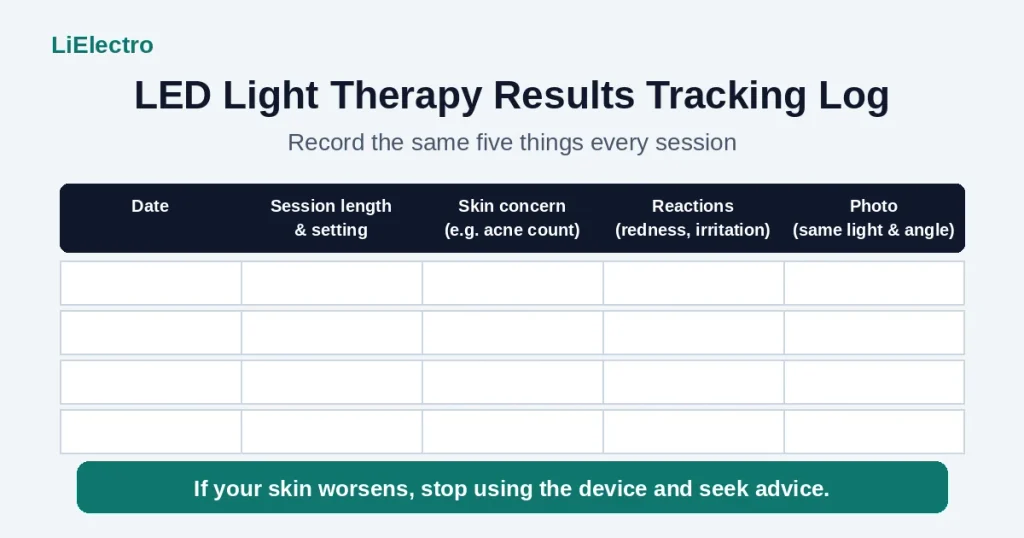
Use these steps:
- Take baseline photos: Use similar lighting, angles, and camera settings.
- Record your sessions: Note the date, duration, and device setting.
- Track your skin concern: For example, note changes in the number of acne lesions or the appearance of fine lines.
- Record unwanted reactions: Note redness, irritation, discomfort, or changes in pigmentation.
- Review progress realistically: Compare photos taken over a meaningful period, following the device’s recommended evaluation timeframe.
Avoid judging effectiveness from day-to-day changes or photos taken in different lighting. If your skin worsens, stop using the device and seek appropriate advice.
When to Stop or Ask a Dermatologist
LED devices are generally considered low-risk when used appropriately, but they are not suitable for everyone. Short-term side effects can include mild irritation or discomfort, and long-term effects are not fully understood.
Ask a healthcare professional before use if you:
- Have a condition that makes you sensitive to light.
- Take medication that may increase photosensitivity.
- Have a history of significant reactions to light-based treatments.
- Are treating persistent acne, rosacea, unexplained pigmentation, or another diagnosed skin condition.
- Are considering LED therapy for a child or teenager.
Stop treatment and seek medical advice if you develop persistent irritation, pain, unusual sensitivity, or new or worsening dark patches.
Follow the manufacturer’s eye-safety instructions and use the specified protective equipment where required. Do not assume that a device is appropriate for every user simply because it is marketed for home use.
Also, distinguish FDA clearance from proof of effectiveness. A device’s regulatory status does not establish that it will deliver every advertised benefit or that its schedule is suitable for every person. For led lights benefits, check our brief guide on the benefits of led therapy with different colors.
Final Takeaway
The safest way to decide how often to use LED light therapy at home is to follow the treatment schedule for your specific device.
Check the recommended frequency, the length of each session, and the safety guidance before starting. Whether you’re using red light therapy for cosmetic skin concerns or blue light for acne, do not assume that daily use, longer sessions, or twice-daily treatments will deliver better results.
A consistent, device-appropriate routine, and realistic expectations, is a better starting point than increasing your exposure.
Frequently Asked Questions
What age should you start using red light therapy?
There is no universal age at which everyone should start red light therapy for skincare. Many at-home devices are intended for adults, and age restrictions vary by product. For children or teenagers, consult a dermatologist and check the manufacturer’s age guidance before use.
Can I use light therapy on my face every day?
You can use it daily only if your specific device’s instructions recommend or permit daily treatment. Some devices have daily schedules; others require rest days. Using a device more frequently than directed may increase the risk of unwanted reactions without improving results.
Can I use an LED mask twice a day?
Only if the manufacturer explicitly recommends twice-daily use for that exact device and intended treatment. Do not double your sessions to make up for missed treatments or speed up results.
Can I use red light therapy and blue light therapy on the same day?
That depends on the device and its instructions. Some devices are designed to combine red and blue light, while separate devices may have different protocols. Do not combine treatments or increase total exposure without checking the guidance for both devices or consulting a qualified professional.
How long does it take to see results from LED light therapy?
The timeframe varies by skin concern, device, and individual response. Some studies evaluate outcomes over several weeks, but this does not guarantee that you will notice changes within the same period. Follow the device’s recommended treatment and evaluation timeframe.
Leave a Reply