
|
Getting your Trinity Audio player ready... |
Quick overview
- Find the exact model number of your LED bulb or fixture.
- Check the dimmer manufacturer’s LED compatibility list.
- Confirm the supported LED load and maximum lamp count.
- Verify neutral-wire and circuit requirements.
- Follow the manufacturer’s installation and wiring instructions.
To check whether an LED bulb and dimmer switch are compatible:
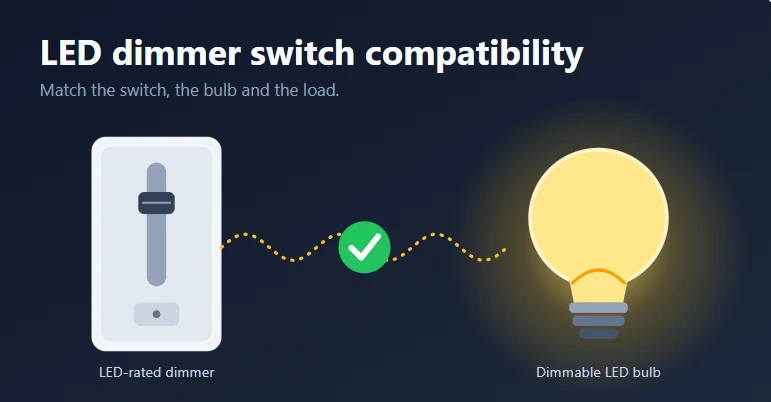
A bulb being dimmable does not automatically mean it is compatible with every LED dimmer.
An LED bulb can be labelled dimmable and still fail to work correctly with a particular dimmer switch. LED dimmer switch compatibility depends on the exact bulb or fixture model, the dimmer’s supported LED load, the electrical wiring and the circuit configuration.
Before connecting an LED light to a dimmer, check the manufacturer’s compatibility information and confirm that both products support the same electrical requirements. This guide explains how to verify compatibility, understand LED load ratings, check wiring requirements and interpret NEMA SSL 7A certification.
How to Verify LED Bulb and Dimmer Compatibility
The most reliable way to check LED dimmer compatibility is to compare the exact product models against the manufacturer’s compatibility information. General product descriptions may not provide enough detail to confirm that a particular combination has been tested.
If you need help choosing a suitable dimmer for your LED bulbs, read our guide on picking the right dimmer switch for LED bulbs to understand the key specifications and features to consider before buying.
Identify the Exact LED Bulb or Fixture Model
Start by checking the LED bulb or fixture label, packaging or product documentation. Record its:
- Manufacturer and brand
- Model or product number
- Wattage and electrical specifications
- Dimming designation
- Driver or power-supply information, if available
This information matters because two LED bulbs from the same brand may use different internal drivers and have different dimming characteristics.
Integrated LED fixtures also require attention. Their LED driver may have different electrical requirements from those of replaceable LED bulbs.
Check the Dimmer’s Supported LED Models
Find the exact model number of your dimmer switch. Then visit the manufacturer’s website or consult its technical documentation.
Look for a compatibility list, tested-lamp list or approved LED bulb list. These documents identify LED products that the manufacturer has tested with a particular dimmer.
A dimmer-kompatibilitätsliste is simply a dimmer compatibility list. It may include supported bulb brands, model numbers, product types and permitted lamp quantities.
For example, someone searching for Legrand LED dimmer compatibility should check the official compatibility documentation for the exact Legrand dimmer model rather than assuming that every Legrand dimmer supports every dimmable LED bulb.
Understand Tested and Unlisted Combinations
A manufacturer’s compatibility list provides useful evidence, but it may not include every LED bulb available on the market.
There are two situations:
- Listed combination: The exact bulb or fixture model appears in the dimmer manufacturer’s documentation, subject to any stated load or installation limits.
- Unlisted combination: The manufacturer has not confirmed that particular pairing in its published documentation.
An unlisted combination is not automatically incompatible. However, you should not assume that it will work reliably without confirmation from the manufacturers.
If the product documentation is unclear, contact the dimmer or LED manufacturer with both model numbers and ask whether the combination is supported. You can read our review on LED dimmable downlight for wothy purchase for bedroom, kitcen, living room and similar places.
Understanding LED Dimmer Load and Inrush Current
LED dimmer compatibility is not determined by the total wattage of the connected bulbs alone. LED drivers can draw a brief current surge when switched on, and their electrical characteristics can affect how a dimmer operates.
Minimum and Maximum LED Load Ratings
Dimmer switches have electrical load limits. For LED lighting, manufacturers may specify a minimum and maximum LED load that the switch can support.
These limits are not necessarily the same as the wattage ratings for incandescent bulbs.
For example, a dimmer labelled with a high incandescent wattage rating does not automatically support the same wattage of LED lighting. LED-specific ratings must be checked separately.
Also check whether the manufacturer specifies a maximum number of LED lamps. Some dimmers have lamp-count restrictions even when the combined wattage appears to be within the stated limit.
Always follow the LED rating and lamp-count limits for the exact dimmer model.
Why Inrush Current Matters for Multiple LED Drivers
An LED driver may briefly draw more current when power is first applied than it draws during normal operation. This short-duration current surge is called inrush current.
When several LED bulbs or fixtures are connected to one dimmer, their combined startup behaviour can affect the electrical load placed on the switch.
This is why nominal wattage alone cannot always establish how many LED lamps a dimmer can support.
Two LED products with similar wattage may have different driver designs and inrush-current characteristics. Their compatibility with the same dimmer can therefore differ.
Check the manufacturer’s maximum lamp count and any specific restrictions for the LED models you intend to connect. Do not calculate a permitted lamp quantity using wattage alone.
How Wiring Affects LED Dimmer Compatibility
Even when an LED bulb and dimmer are listed as compatible, the electrical circuit must also meet the dimmer’s installation requirements.
Neutral-wire requirements and multi-way switching arrangements are particularly important.
Neutral and No-Neutral Dimmer Requirements
Some electronic dimmers require a neutral wire to operate. Others are designed to work without a neutral connection.
A neutral-wire dimmer uses the neutral conductor as part of its operating power supply. A no-neutral design uses a different circuit arrangement and may have additional requirements concerning the connected LED load.
Before installation, check:
- Whether the dimmer requires a neutral connection.
- Whether a neutral conductor is available at the switch box.
- Whether the dimmer supports your LED bulb or fixture.
- Whether the manufacturer specifies a minimum load or other installation conditions.
Do not assume that a no-neutral dimmer will work with every LED bulb. Its compatibility depends on the specific dimmer design and the connected LED driver.
If you cannot identify the conductors or confirm the wiring arrangement, have a qualified electrician inspect the circuit. Do not experiment with live electrical wiring.
Single-Pole vs Three-Way Circuit Compatibility
A single-pole circuit controls a light from one switch location. A three-way circuit allows the same light to be controlled from two different locations.
Not every LED dimmer supports both arrangements.
If you are replacing a switch in a three-way circuit, check whether the dimmer is rated for three-way operation. Some models also require a specific companion switch or accessory dimmer at the second location.
Check the following before installation:
- Whether the dimmer supports single-pole, three-way or both configurations.
- Whether a companion switch is required.
- Whether the existing circuit wiring matches the manufacturer’s diagram.
- Whether the LED load is supported in that configuration.
A dimmer may support a particular LED bulb in a single-pole installation but have different requirements in a three-way arrangement. Always follow the wiring diagram supplied for the exact model.
What Is NEMA SSL 7A Compatibility?
NEMA SSL 7A is a technical standard related to the compatibility of LED light engines and forward phase-cut dimmers. It provides a defined framework for evaluating certain LED lighting and dimmer combinations.
It is useful when checking whether products have been designed or tested against recognised compatibility requirements. However, it should not be treated as universal proof that every LED bulb will work with every dimmer.
What NEMA SSL 7A Covers
The standard addresses compatibility requirements for specified combinations of LED light engines and forward phase-cut dimmers.
It provides a technical basis for evaluating how these products operate together under the conditions covered by the standard.
When checking a product, look for the manufacturer’s documentation explaining whether the LED product or dimmer complies with the relevant requirements and what product configurations are covered.
What NEMA SSL 7A Does Not Guarantee
NEMA SSL 7A does not mean that every LED bulb is compatible with every LED dimmer.
Compatibility still depends on the specific products, their electrical characteristics and the installation conditions.
For example, the standard does not remove the need to check:
- Exact bulb and dimmer models
- Manufacturer compatibility documentation
- LED load and lamp-count limits
- Neutral-wire requirements
- Single-pole or three-way circuit arrangements
Treat NEMA SSL 7A as useful technical information, not a substitute for checking the manufacturer’s compatibility list.
What If Your LED and Dimmer Are Not Listed as Compatible?
If your LED bulb or fixture does not appear on the dimmer manufacturer’s compatibility list, do not immediately assume that the combination is unsafe or incompatible. It simply means you do not have confirmation from that published list.
Take these steps before using the combination:
- Check both product manuals: Look for LED load limits, supported dimming requirements and installation restrictions.
- Confirm the exact model numbers: A similar product name does not guarantee that two model versions have the same driver or electrical characteristics.
- Contact the manufacturers: Ask whether the specific LED and dimmer models have been tested together.
- Check the circuit requirements: Confirm neutral-wire availability and whether the dimmer supports the existing switching arrangement.
- Use a confirmed pairing if necessary: If compatibility cannot be established, choose a combination recommended by the manufacturer.
Do not bypass electrical requirements or modify wiring to make an unverified combination work. If the circuit or installation requirements are unclear, consult a qualified electrician.
Final Verdict
For reliable LED dimmer switch compatibility, check the exact bulb and dimmer models, manufacturer compatibility list, LED load limits and wiring requirements. A dimmable LED bulb does not automatically work with every LED dimmer. When compatibility is uncertain, confirm with the manufacturer before installation. For the problem in dimable lights, check our guide on quick fixes.
Frequently asked questions
Can I use a regular dimmer with LED bulbs?
Sometimes, but it’s a gamble. The U.S. Department of Energy says LEDs don’t work with every dimmer made for incandescent lamps. An older dimmer can flicker, buzz, or dim poorly. An LED-rated dimmer that appears on the maker’s compatibility list is the safer bet.
What makes a dimmer LED compatible?
The maker has tested the dimmer with LED loads and published a rated load range plus a list of approved bulbs. Lutron notes that even compatible bulbs can offer less dimming range than incandescents, so always check the list for your exact bulb.
Why do LED bulbs flicker on a dimmer?
Flicker usually comes from a mismatch between the dimmer and the bulb’s driver. Too little load, an incandescent-only dimmer, or mixed bulb models are the common triggers. Swapping one LED for an incandescent bulb tells you which part is at fault.
How many LED bulbs can I put on one dimmer?
Add up the wattage of every bulb and stay below the dimmer’s LED rating, with room to spare. Also check the minimum. Some Lutron LED dimmers need 2 or more lamps, and the DOE warns that inrush current can overload a dimmer at far less than its incandescent rating.
Do I need an electrician to install a dimmer?
Many homeowners handle a like-for-like swap. Turn off the breaker, confirm with a voltage tester, and follow local code. Call a licensed electrician if you find unfamiliar wiring, no neutral for a dimmer that needs one, or anything that looks scorched.
Do dimmer switches work with LED?
Yes, dimmer switches can work with LED bulbs, but the dimmer and LED bulb must be compatible. Use an LED-compatible dimmer and dimmable LED bulbs. Standard incandescent-only dimmers may cause flickering, buzzing, poor dimming, or other problems.
Leave a Reply