
|
Getting your Trinity Audio player ready... |
Choosing the right dimmer switch for LED bulbs starts with compatibility. The dimmer must be designed for LED loads and support the requirements of your specific bulbs or fixtures. An incompatible switch may cause flickering, buzzing, limited brightness adjustment, or lights that turn off unexpectedly.
Before buying a light bulb dimmer switch, check whether your bulbs are dimmable, review the manufacturer’s compatibility recommendations, and confirm the dimmer’s load and wiring requirements.
Before choosing a dimmer, it helps to understand working of dimmable LED lights. Our guide explains how the dimmer, LED driver, and LED work together to adjust brightness.
Quick Overview
To pick the right dimmer switch for LED bulbs, choose an LED-rated model that is compatible with your bulbs, electrical load, and wiring.
- LED rating:Choose a dimmer specifically designed to control LED loads.
- Bulb compatibility: Check the bulb manufacturer’s recommended dimmers.
- Load requirements: Verify the dimmer’s minimum and maximum LED load limits
- Dimming method:Match the dimmer to the requirements of the LED driver.
- Wiring: Check whether the dimmer requires a neutral wire.
- Smart features: Confirm that the dimmer supports your preferred control system.
What to Check Before Choosing an LED Dimmer?
LBefore comparing dimmer switches, identify the requirements of your existing LED bulbs or fixtures. A dimmer that works with one LED model may not work properly with another.
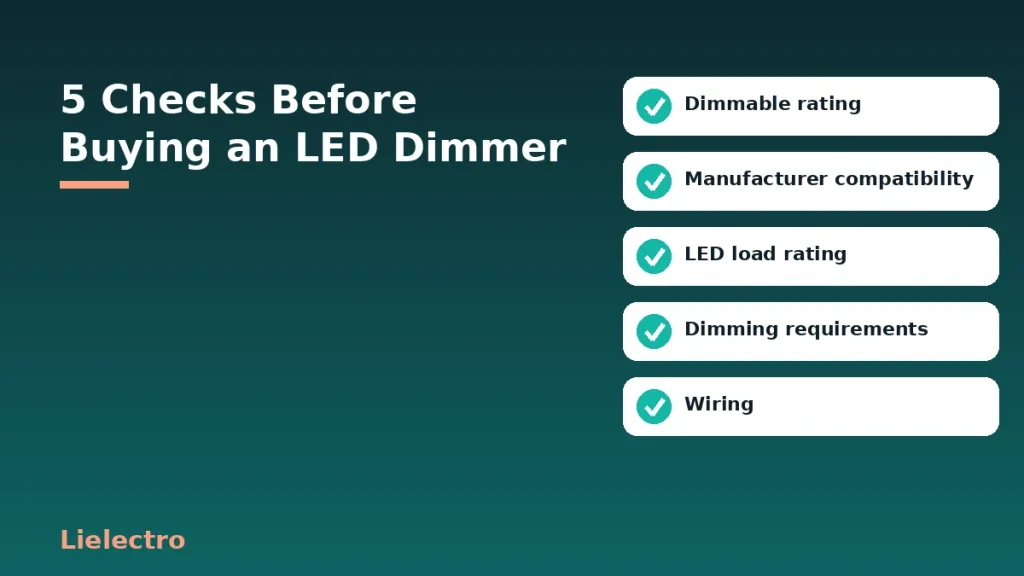
Check these five things first:
- Dimmable rating: The bulb or fixture must specifically support dimming.
- Manufacturer compatibility: Look for recommended or tested dimmer models.
- LED load rating: Check the dimmer’s permitted LED load and number of compatible lamps.
- Dimming requirements: Confirm which dimming control the LED driver supports.
- Wiring: Check whether your electrical setup meets the dimmer’s installation requirements.
These checks help narrow down your options before you buy.
How to Pick the Right Dimmer Switch for LED Bulbs
Once you know your lighting requirements, use the following steps to choose a suitable dimmer. Once you have selected a dimmer, check our guide to compatibility of LED dimmer switch to verify bulb compatibility, load limits and wiring requirements.
1- Choose an LED-Rated Dimmer
Start with a dimmer that explicitly supports LED lighting loads.
An older dimmer designed only for incandescent or halogen bulbs may not control LED bulbs reliably. LEDs use electronic drivers and have different electrical characteristics, so a dimmer’s incandescent wattage rating does not automatically establish its suitability for LED lighting.
Look for an LED-compatible rating in the product specifications. If the manufacturer provides a compatibility list, check your bulb’s exact model.
2- Check the Dimmer’s Minimum and Maximum LED Load
Every dimmer has operating limits. However, LED load ratings can differ from traditional incandescent ratings.
Pay attention to:
- Minimum LED load: The minimum supported LED load or number of lamps needed for reliable operation.
- Maximum LED load: The maximum LED load or number of compatible lamps permitted by the manufacturer.
For example, six 9-watt LED bulbs have a combined nominal wattage of 54 watts:
6 × 9 W = 54 W
This calculation tells you the bulbs’ combined rated wattage, but it does not prove that a particular dimmer can control them. LED drivers can have different electrical characteristics, including startup current, so the manufacturer’s LED-specific rating and compatibility information take priority.
Some manufacturers specify LED limits by the number of tested bulbs rather than applying the dimmer’s traditional incandescent wattage limit. Always check the instructions for your exact dimmer model.
3- Match the Dimmer to the Bulb’s Dimming Requirements
LED bulbs and fixtures can support different dimming controls. The dimmer must match the requirements specified by the bulb or fixture manufacturer.
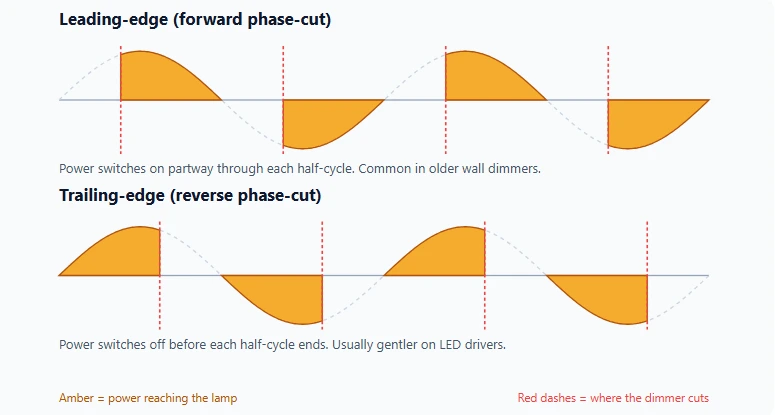
Two common types of phase-cut dimmers are:
| Dimmer type | What to know |
|---|---|
| Leading-edge | Some LED bulbs and drivers are designed to work with this type of dimmer. |
| Trailing-edge | Often used with compatible electronic LED loads, but not suitable for every LED. |
Neither type is automatically the best choice for all LED bulbs. Compatibility depends on the specific driver and dimmer combination.
Check the product specifications or manufacturer’s compatibility list before choosing between them.
4- Check the Wiring Requirements
Dimmer switches can have different wiring requirements. Some models operate without a neutral wire, while others require one to power their internal electronics.
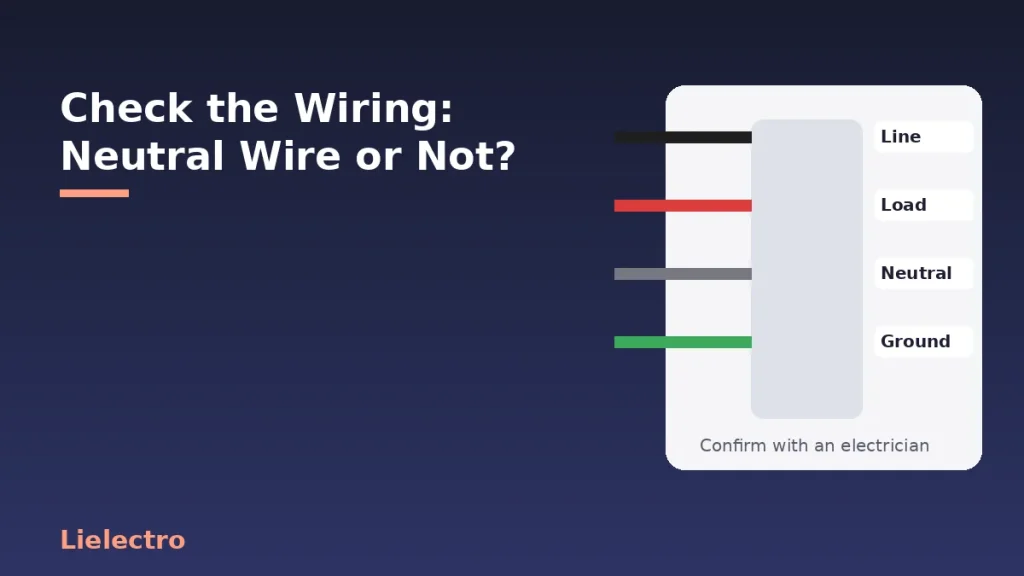
Before buying, check:
- Whether the dimmer requires a neutral wire.
- The wiring configuration specified by the manufacturer.
- Whether your existing electrical setup supports that configuration.
Do not assume that every LED dimmer requires a neutral wire or that every model can operate without one. If you are unsure about your wiring, ask a qualified electrician to inspect it and confirm compatibility before installation.
5- Decide Whether You Need a Smart Dimmer
A smart dimmer can provide brightness control through a smartphone app, voice assistant, or compatible home-automation system.
Before choosing one, check:
- Compatibility with your LED bulbs or fixtures.
- Supported dimming requirements.
- Minimum and maximum LED load.
- Neutral-wire requirements.
- Compatibility with your preferred smart-home platform.
One important distinction: smart LED bulbs that dim through their own app or wireless controller are not automatically compatible with a conventional wall dimmer. Use a physical smart dimmer only when the bulb manufacturer specifically supports that arrangement.
Which Dimmer Switch Do I Need for My LED Bulbs?
The right dimmer depends on the type of LED lighting you have and the compatibility requirements of its driver.
Use this table to identify what to look for:
| Your lighting setup | What to choose |
|---|---|
| Standard dimmable LED bulbs | An LED-rated dimmer listed as compatible with the bulbs |
| Multiple LED bulbs on one switch | A dimmer with an appropriate tested LED load rating |
| Integrated LED fixture | A dimmer recommended by the fixture manufacturer |
| Smart LED bulbs | The manufacturer’s supported app, controller, or smart-home control |
| LED lighting with an existing wall dimmer | A replacement or existing dimmer confirmed compatible with the LED model |
If you are still unsure which dimmer switch you need, start with the LED bulb’s model number and search the manufacturer’s compatibility information. Then compare the recommended dimmer with its installation and load specifications.
What Happens If You Use the Wrong Dimmer?
Using an incompatible dimmer with LED bulbs can cause unstable operation or prevent the lights from dimming properly.
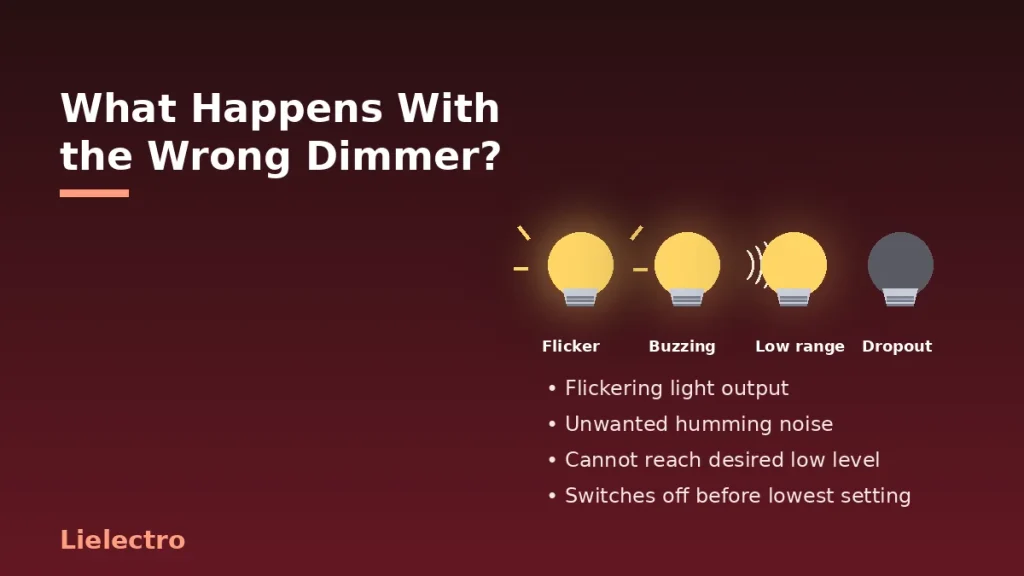
Common symptoms include:
- Flickering: The light output may fluctuate instead of remaining steady.
- Buzzing or humming: The dimmer or LED driver may produce unwanted noise.
- Limited dimming range: The light may not reach the desired low or high brightness level.
- Dropout: The light may switch off before the dimmer reaches its lowest setting.
- Unexpected operation: The bulbs may fail to turn on or respond consistently.
These symptoms do not always mean the LED bulb is defective. Dimmer compatibility, load requirements, driver characteristics, and electrical installation can all affect performance.
If your dimmable LED bulbs are flickering, read our guide on flickering dimmable LED lights and their fixing for more detailed troubleshooting.
Final Takeaway
The right dimmer switch for LED bulbs is one that matches the bulbs’ dimming requirements, the manufacturer’s LED load specifications, and your existing wiring.
Do not choose a dimmer based only on its maximum incandescent wattage or a general LED-compatible label. Check the compatibility information for your exact bulb and dimmer models before buying. This is the most reliable way to avoid common dimming problems and choose a suitable switch for your lighting setup.
FAQs
I switched to LED bulbs, but my dimmer switch doesn’t work with them. What’s the issue?
The most likely issue is incompatibility between the dimmer and LED bulbs. Older dimmers may be designed for incandescent or halogen bulbs and may not work properly with LED drivers. Check that your LED bulbs are dimmable and that your dimmer is rated for LED loads. Also verify the dimmer’s minimum load, wiring requirements, and compatibility with your specific bulbs.
Can I use any dimmer switch with LED bulbs?
No. The dimmer must be compatible with the LED bulb or fixture, its driver, load range, and dimming method.
Do LED bulbs need a special dimmer?
Dimmable LED bulbs need a compatible dimmer or control system. An older incandescent dimmer may not provide reliable LED performance.
Can I use an old dimmer with new LED bulbs?
Sometimes. Your existing dimmer must support LED loads and be compatible with your specific bulbs. Check the dimmer manufacturer’s compatibility information before using it with new LED lighting.
Leave a Reply